Why Every Minute Counts in Bed Bug Warfare
That first mysterious, itchy bite. The faint, rusty stain on your pillowcase. The slow-dawning horror that your home—your sanctuary—has been invaded. Bed bugs are more than a pest problem; they’re a psychological siege. While the global bed bug control market soared to $1.2 billion in 2023, the true cost is measured in sleepless nights, anxiety, and the isolating stigma that makes sufferers want to hide.
This guide is your tactical blueprint. We’ve distilled the latest entomology research, professional exterminator strategies, and real-world success stories into a clear, actionable 7-step battle plan. It’s designed not just to eradicate the infestation, but to deliver medical-grade relief from bites within hours. Forget panic. Let’s begin the counter-attack.

Bed Bug Identification: Are You Really Dealing with Bed Bugs?
Before you wage war, confirm the enemy. Misidentification wastes precious time and money.
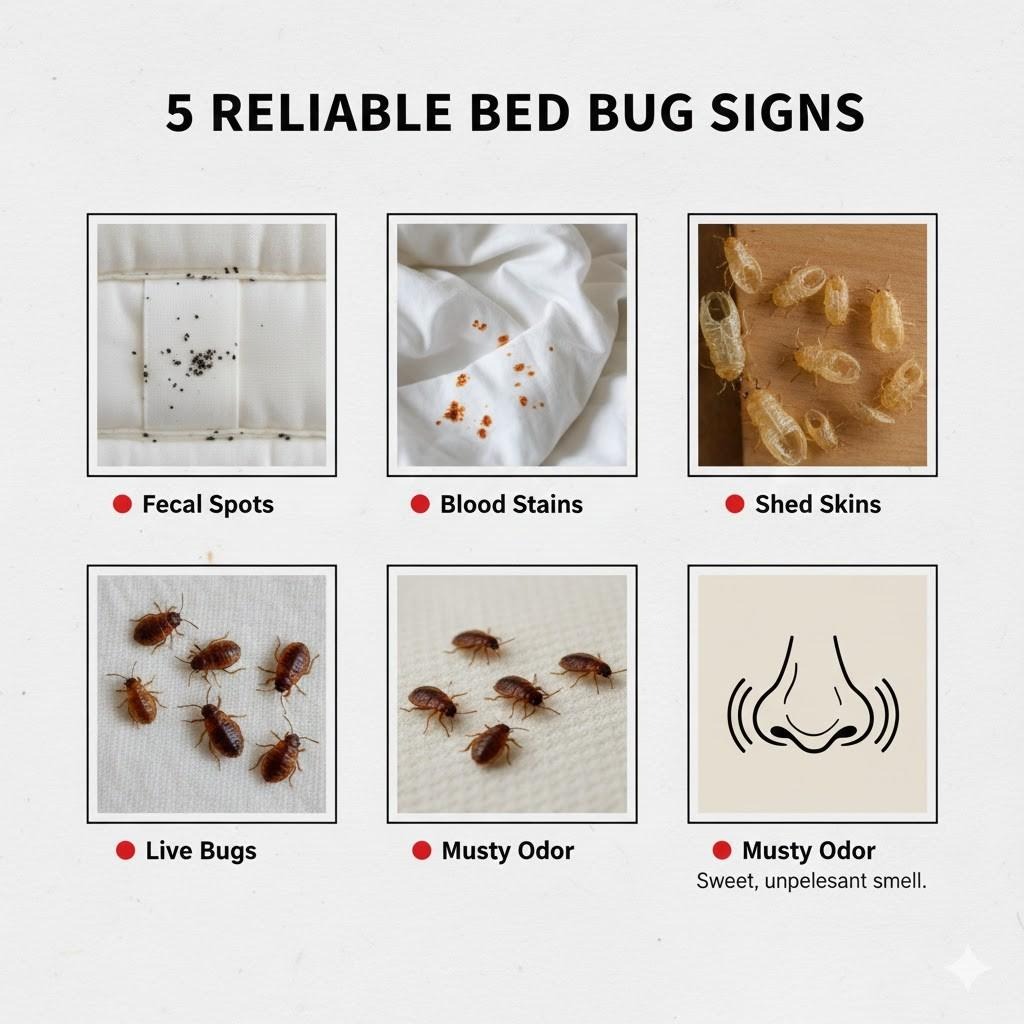
5 Telltale Signs Most People Miss
- Fecal Evidence: Tiny, dark brown or black specks (digested blood) that smear when wet. Look for clusters on mattress seams, headboards, and box springs.
- Blood Stains: Rusty or reddish smears on sheets or pajamas from crushed, engorged bugs or bleeding bite wounds.
- Shed Skins: Pale yellow, translucent exoskeletons left behind as nymphs grow.
- Live Bugs: Adults are apple-seed sized (4-5mm), reddish-brown, and oval. Nymphs are smaller and lighter.
- Distinct Odor: A severe infestation often emits a sweet, musty scent from the bugs’ scent glands.
Bed Bugs vs. Lookalikes: Common Misidentifications
- Fleas: Jump and primarily bite ankles/pets. Bed bugs crawl and bite any exposed skin.
- Carpet Beetles: Have wings, are attracted to light, and don’t bite. Their larvae can cause skin irritation.
- Booklice: Tiny, pale, and found in damp areas with mold—not beds.
Pro Tip: Perform a 15-Minute Inspection.
Strip your bed and use a bright flashlight and credit card to scrape along mattress seams, checking for signs within 5 feet of where you sleep—the primary “hot zone.”
Emergency Bite Relief: Stop the Itch in 15 Minutes or Less
The maddening itch is your immune system’s histamine response to proteins in bed bug saliva. Here’s how to shut it down fast.
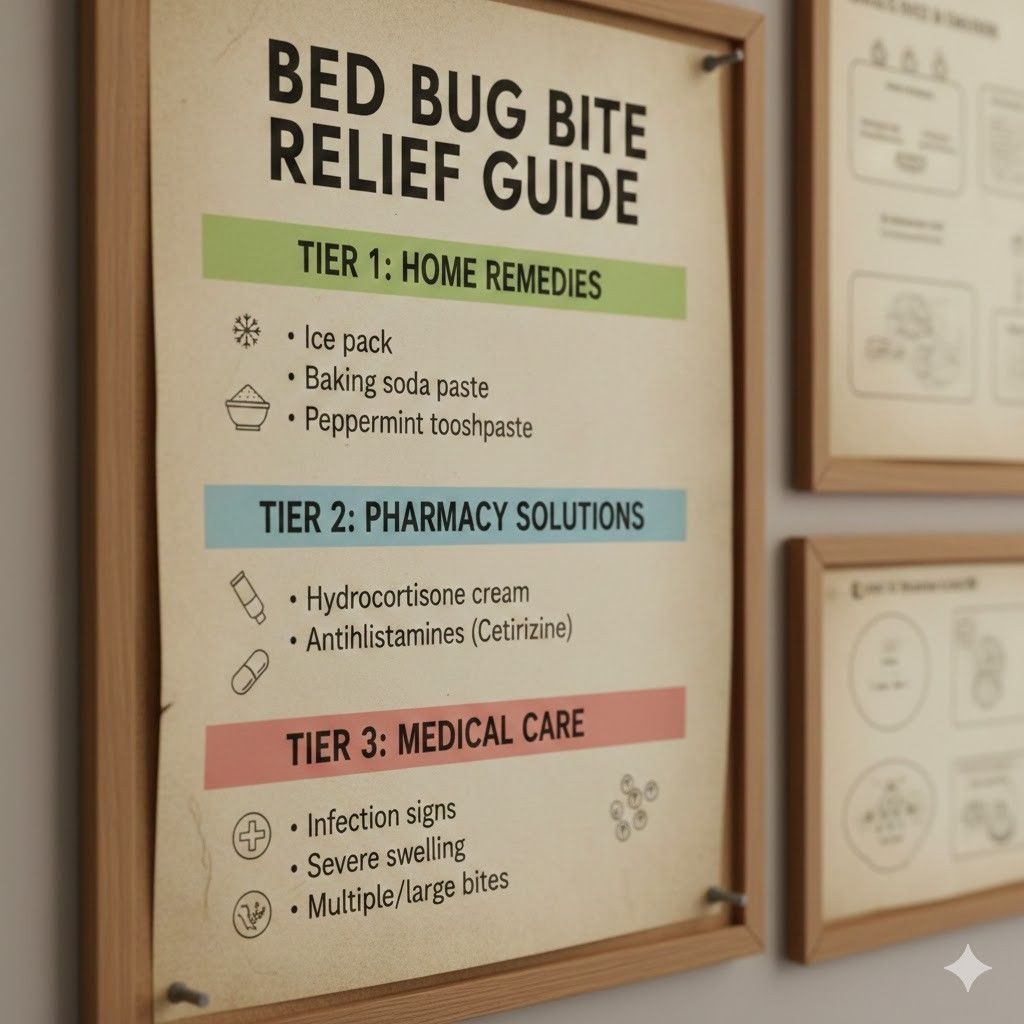
Tiered Relief System: From Kitchen to Pharmacy
Tier 1: Instant Home Remedies (0-15 Minutes)
- Cold Compress: Apply an ice pack wrapped in a thin cloth for 10-minute intervals. The cold numbs the nerves and reduces inflammation.
- Baking Soda Paste: Mix with water to create an alkaline paste. Apply for 10 minutes to neutralize acidic saliva proteins.
- Toothpaste Trick: A dab of peppermint toothpaste provides a strong menthol cooling effect.
Tier 2: Pharmacy-Grade Solutions
- Topical Steroids: 1% Hydrocortisone cream (like Cortizone-10) reduces inflammation and itching within 20-30 minutes.
- Oral Antihistamines: Cetirizine (Zyrtec) or Loratadine (Claritin) provide 24-hour, non-drowsy systemic relief.
Tier 3: When to Seek Medical Attention
Consult a doctor if you experience:
- Signs of infection (pus, increasing redness, fever).
- Severe allergic reactions (difficulty breathing, swelling).
- Bites covering a large area of your body.
Critical Note: 30% of people show no visible reaction to bites. You can be a “silent carrier,” unknowingly spreading bugs. Lack of bites does NOT mean no infestation.
The 7-Step Elimination Plan: Your Room-by-Room Battle Strategy
Success requires systematic, military precision. Half-measures breed resistance.
Step 1: Containment & Quarantine (First 4 Hours)
Goal: Isolate the infestation to prevent spread.
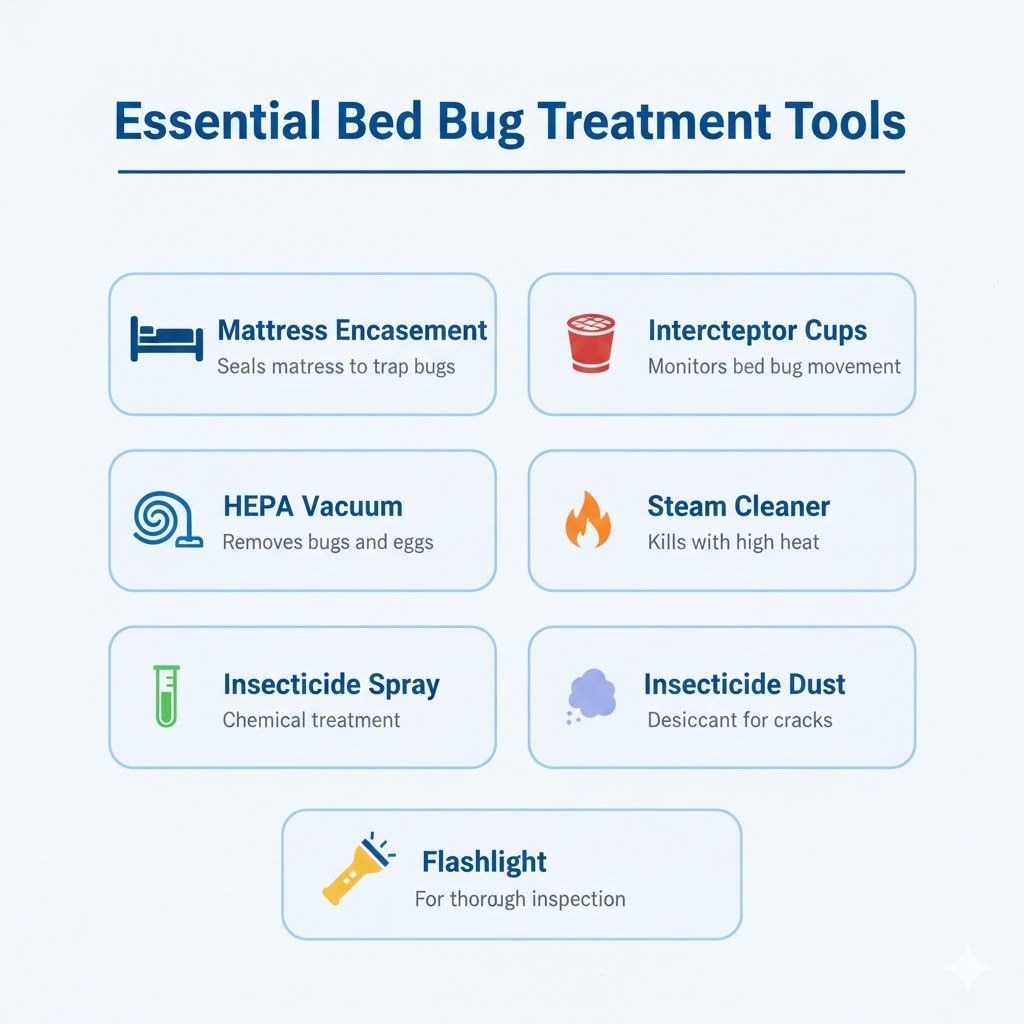
- Bed Quarantine: Move your bed 6 inches from all walls. Place each leg in a climb-up interceptor trap.
- Bag and Seal: Place all bedding, clothing, and soft items from the room into sealed plastic bags for treatment.
- Declutter: Remove unnecessary items from the floor and around the bed to eliminate hiding spots.
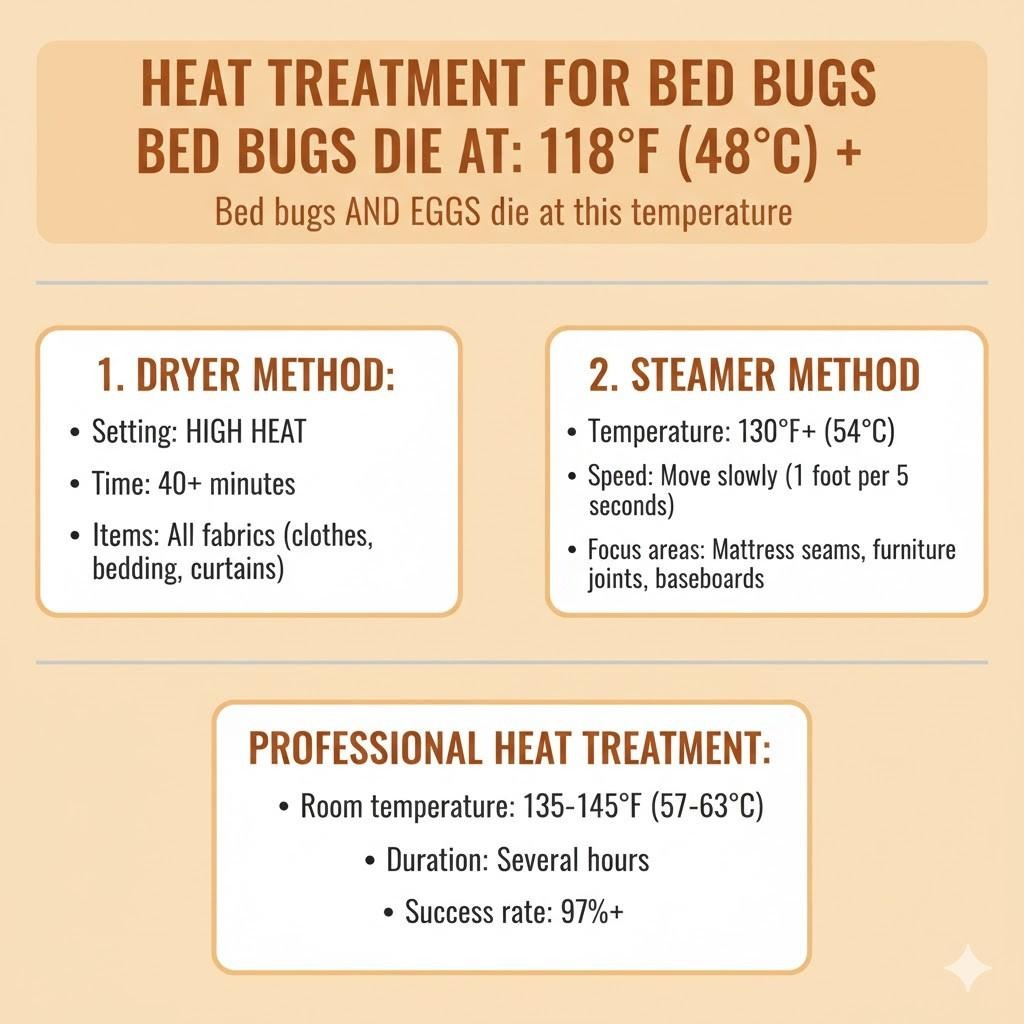
Step 2: Heat Treatment – Your Most Powerful Weapon (Days 1-3)
Bed bugs and their eggs die at temperatures above 118°F (48°C).
- Fabric Salvation: Wash and dry all possible fabrics on the highest heat setting for at least 40 minutes.
- Steam Warfare: Use a commercial steamer (reaching >130°F/54°C) on mattresses, furniture joints, baseboards, and carpets. Move slowly (1 foot per 5 seconds) to ensure lethal heat penetration.
- Professional Heat Treatment: For whole-room or home eradication, pros use heaters to raise room temps to 135-145°F (57-63°C) for several hours. Success rate: over 97%.
Step 3: Targeted Chemical & Desiccant Application (Days 4-7)
Heat may miss bugs deep in walls. This creates a lethal barrier.
- EPA-Registered Insecticides: Use products labeled for bed bugs, like CrossFire or Temprid FX. Apply as a fine mist to cracks, crevices, and along baseboards. NEVER spray your mattress or bedding you’ll touch.
- Desiccant Dusts: Apply a thin layer of CimeXa or food-grade Diatomaceous Earth into wall voids, behind outlets, and under furniture. These dusts fatally dehydrate bugs over 1-2 weeks. Wear a mask during application.
Step 4: Mattress & Furniture Encasement (Day 1 – Leave On)
- Encase your mattress and box spring in certified bed bug-proof encasements. Choose light-colored, bite-proof models.
- Any bugs trapped inside will be unable to feed and will eventually starve. Leave encasements on for at least 12 months.
Step 5: Deep Cleaning & Vacuuming (Ongoing)
- Use a HEPA-filter vacuum with a crevice tool to physically remove bugs and eggs from surfaces. Vacuum seams, frames, carpets, and baseboards.
- Immediately empty the vacuum canister into a sealed plastic bag and dispose of it outside.
Step 6: Monitoring & Verification (Weeks 2-8)
- Keep interceptors under bed/furniture legs. Check them weekly.
- Continue sleeping in the treated room. Moving rooms chases bugs and spreads the infestation.
- The “All-Clear”: If you see no signs (live bugs, new fecal spots, shed skins) for 8 consecutive weeks, you can be 95% confident of elimination.
Step 7: Building a Prevention Fortress (For Life)
- Travel Protocol: Inspect hotel rooms (mattress seams, headboard). Keep luggage on a rack, never on the bed/floor. Wash all clothes in hot water upon return.
- Secondhand Items: Quarantine and thoroughly inspect or treat all used furniture, clothing, or electronics before bringing them in.
- Regular Inspections: Do a quick visual check of your bedroom monthly.
Professional Extermination: When DIY Isn’t Enough
5 Signs You Need to Call the Pros:
- The infestation has spread to multiple rooms.
- You live in an apartment or multi-unit building.
- Aggressive DIY efforts have failed after 2-3 weeks.
- You are unable to perform the physical prep work.
- You need guaranteed results quickly.
Choosing an Exterminator: Ask These Questions
- “What is your specific treatment plan and why?”
- “Do you use a combination of heat and chemicals?” (Hybrid approaches are most effective).
- “What is your guarantee and follow-up protocol?”
- “Are you licensed and insured?”
Cost Breakdown:
- Chemical-Only Treatment: $300 – $900 per room, usually requiring multiple visits.
- Whole-Home Heat Treatment: $1,500 – $4,000+, often effective in one day.
- Canine Inspection: $200 – $400 for accurate detection.
Special Situations: Apartments, Travel, and Sensitive Cases
- Renters: Notify your landlord in writing immediately. In most areas, they are legally responsible for treatment in multi-unit buildings. Document everything with photos.
- Travelers: If you get bitten at a hotel, notify management immediately. Upon returning home, unpack in your garage or bathroom and wash/dry everything on high heat.
- Homes with Kids/Pets: Focus on physical methods (heat, steam, encasements) and desiccant dusts like CimeXa, which are low-toxicity. Keep pets out of treated rooms until insecticides have dried completely.
Bed Bug FAQs: Answering Your Most Pressing Questions
Q: Can bed bugs fly or jump?
A: No. They are wingless and can only crawl. This is why interceptor traps on bed legs are so effective.
Q: Do bed bugs transmit diseases like mosquitoes?
A: Current research shows no evidence of disease transmission. The primary risks are allergic reactions, secondary infections from scratching, and psychological distress.
Q: Can I sleep in my bed during treatment?
A: Yes, you should. Sleeping in your treated bed (with interceptors) acts as a “bait station” to draw out and trap remaining bugs, preventing them from migrating to other rooms.
Q: How long can bed bugs live without feeding?
A: Adults can survive 6-12 months without a blood meal in cool conditions. This is why treatment must be thorough and why encasements must stay on for so long.Q: Are natural remedies (essential oils) effective?
A: While some oils (tea tree, lavender) show repellent properties in labs, they are not effective for eliminating an established infestation. They can be part of a prevention routine but should not be relied upon for control.
Conclusion: Reclaiming Your Peace of Mind
Overcoming a bed bug infestation is a marathon, not a sprint. It demands persistence, thoroughness, and a systematic approach. By following this 7-step plan, you move from feeling like a victim to becoming the commander of your home’s defense.
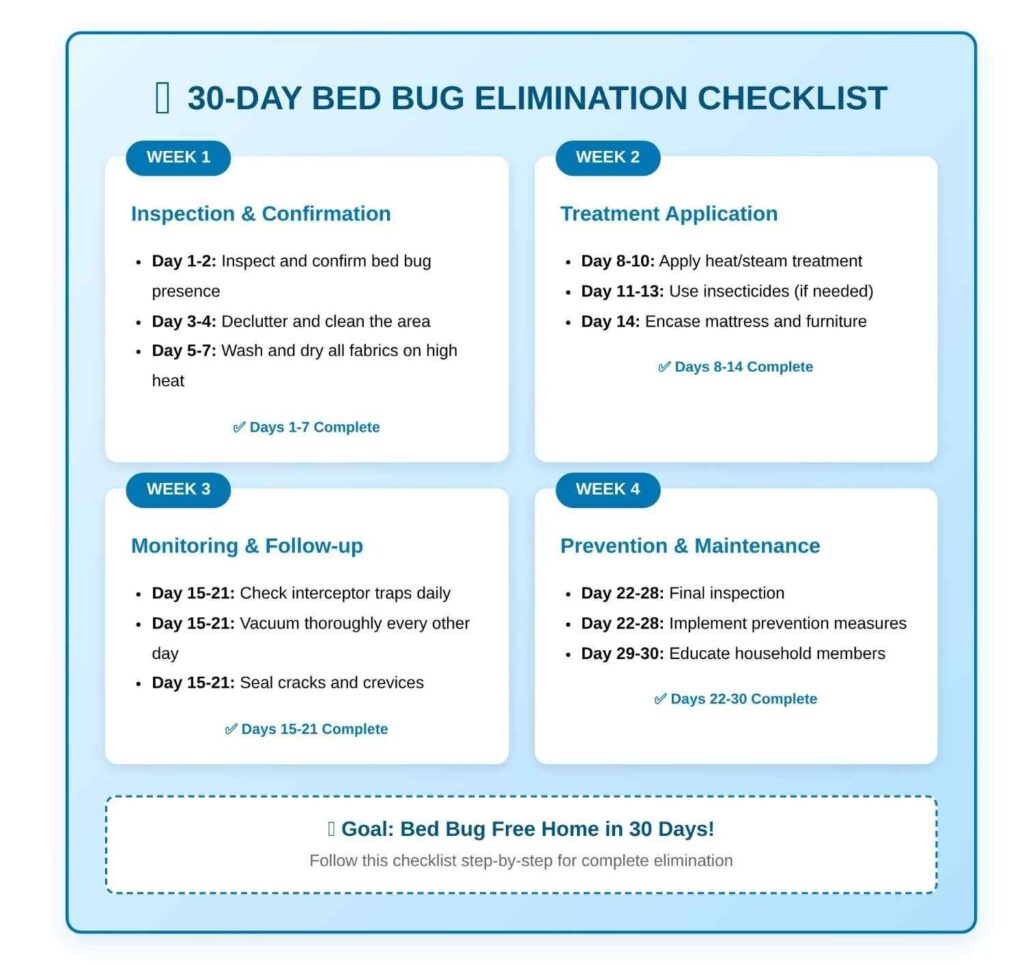
Your 30-Day Action Checklist:
- Week 1: Confirm, contain, and begin heat treatment. Get bite relief.
- Week 2-3: Apply chemical/desiccant barriers. Install encasements.
- Week 4: Begin rigorous monitoring. Retreat if signs persist.
Remember, speed is critical. Every day of delay allows the infestation to grow exponentially. You have the knowledge and the plan. Take your first step tonight. For more home care tips and pest control guides, visit our home maintenance blog.