
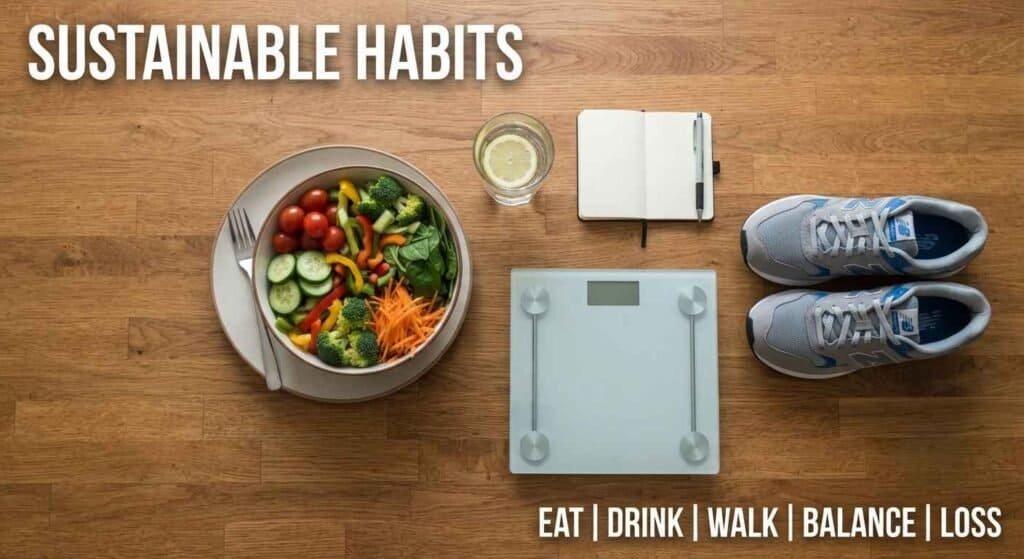

Somewhere between “eat this one weird food” and “cut 1,200 calories and run five miles a day,” most people lose the plot on weight loss entirely. They try a diet. It works for three weeks. Then life happens, the diet falls apart, and the weight creeps back – sometimes with a little extra along for the ride.
If that sounds familiar, here’s the good news: you don’t need an extreme diet to beat obesity. In fact, extreme diets are one of the biggest reasons people stay stuck in a cycle of losing and regaining weight for years. What actually works – and what the research keeps pointing back to – is a set of small, boring, repeatable habits that add up over months, not days.
This guide walks through exactly what those habits are, why they work, and how to realistically expect your body to change over time. No juice cleanses. No 500-calorie days. Just a clear, honest plan.
What Obesity Actually Means (It’s Not Just a Number on a Scale)

Before jumping into solutions, it helps to understand what you’re actually dealing with.
How obesity is measured
Obesity is a chronic medical condition, not a character flaw or a lack of willpower. It’s typically defined using body mass index (BMI), a simple calculation of weight relative to height. Doctors classify a BMI between 25 and 29.9 as overweight, while 30 or higher falls into the obese category. A BMI of 40 or higher is considered severe obesity.
BMI isn’t perfect — it doesn’t account for muscle mass, body composition, or where fat is stored on the body — but it remains the standard screening tool doctors use because it’s simple, inexpensive, and correlates with health risk at a population level. Many doctors now also look at waist circumference alongside BMI, since fat stored around the abdomen carries higher health risks than fat stored elsewhere.
The current state of obesity — 2026 statistics
Obesity isn’t a niche problem. It’s one of the most common chronic health conditions in the world:
- In the United States, 40.3% of adults have obesity, based on the most recent NHANES survey data, and nearly 1 in 10 has severe obesity. That works out to more than 100 million American adults.
- Obesity rates are highest among adults aged 40-59, at 46.4% — notably higher than younger or older age groups.
- Every single U.S. state now has an adult obesity prevalence of at least 25%.
- Globally, roughly 1 in 8 people are living with obesity, and more than 1 billion people worldwide now have the condition, according to the World Health Organization and the NCD Risk Factor Collaboration. Nearly 3 billion people are living with either overweight or obesity.
These numbers matter for one reason: if you’re struggling with your weight, you are absolutely not alone, and it’s not because you haven’t tried hard enough. Obesity is driven by a tangle of factors — genetics, hormones, sleep, stress, food environment, medications, and yes, daily habits. Understanding that complexity is the first step toward a plan that actually sticks.
Why Extreme Diets Fail (And Why That’s Not Your Fault)

If you’ve tried a crash diet before and it didn’t stick, that’s not a personal failure — it’s basic physiology working against you.
The metabolic slowdown problem
When you drastically cut calories, your body doesn’t know the difference between “intentional diet” and “famine.” It responds by slowing down your metabolism to conserve energy, increasing hunger hormones like ghrelin, and reducing hormones that signal fullness. This is sometimes called metabolic adaptation, and it’s a big reason why the scale stalls even when you’re barely eating – and why weight often comes back faster once the diet ends.
The all-or-nothing trap
Extreme diets also tend to be psychologically unsustainable. Cutting out entire food groups or slashing calories to unrealistic levels creates a scarcity mindset. One slip – a slice of birthday cake, a missed gym day – can feel like total failure, which often triggers giving up altogether. This “all-or-nothing” thinking is one of the most common patterns behind yo-yo dieting.
The pattern repeats: restrict, struggle, quit, regain, repeat. Each cycle can make the next round of weight loss harder, both physically and mentally.
The Real Secret: It’s a Calorie Deficit, Not a Miracle

Here’s the part every extreme diet, every trendy supplement, and every “detox tea” is quietly built on: weight loss happens when you consistently burn more calories than you take in. That’s called a calorie deficit, and it’s the mechanism behind every legitimate weight-loss method that exists.
The good news is that a calorie deficit doesn’t require dieting in the traditional sense. To lose weight, your body needs to tap into stored fat — which happens when your daily energy expenditure outpaces your daily intake. You can create this through small, sustainable shifts: eating slightly less, moving slightly more, or – ideally – a combination of both. A modest deficit of 300-500 calories a day, sustained consistently, tends to be far more sustainable and far less likely to trigger the metabolic pushback that extreme diets cause.
This reframe is powerful because it takes the pressure off finding the “perfect” diet and puts the focus on building habits that quietly create that deficit in the background of your normal life.
12 Sustainable Habits That Beat Obesity Without Extreme Diets

These aren’t rules. They’re levers. Pick a few, build consistency, then add more.
1. Build meals around protein and fiber
Protein and fiber are the two most filling nutrients you can eat, and they help you feel satisfied on fewer calories. Eggs, chicken, fish, beans, lentils, and Greek yogurt are strong protein sources. Vegetables, fruit, oats, and whole grains bring the fiber. Starting meals with these foods naturally crowds out less filling, calorie-dense options.
2. Use portion control instead of restriction
You don’t have to eliminate foods you love – you just have to right-size them. Using a smaller plate, plating food in the kitchen instead of eating from serving dishes, and paying attention to hunger and fullness cues are simple ways to eat less without feeling deprived.
3. Slow down and eat without distractions
It takes roughly 20 minutes for your brain to register fullness. Eating quickly in front of a screen makes it easy to overeat before that signal arrives. Slowing down — chewing more, putting your fork down between bites — gives your body time to catch up with your plate.
4. Cook more meals at home
Restaurant and packaged foods tend to be higher in calories, sugar, and sodium than homecooked meals, and it’s genuinely difficult to estimate what’s actually in them. Cooking even a few more meals a week at home gives you direct control over ingredients and portions.
5. Drink more water, cut back on sugar
Sugary drinks are one of the easiest sources of “invisible” calories — the kind that don’t fill you up but add up fast. Swapping soda, sweetened coffee drinks, and juice for water, sparkling water, or unsweetened tea is one of the simplest changes with an outsized impact. Drinking a glass of water before meals can also help with portion awareness.
6. Prioritize 7-9 hours of sleep
Sleep and weight are more connected than most people realize. Short sleep disrupts ghrelin and leptin, the hormones that regulate hunger and fullness, which tends to increase appetite — especially for high-calorie, high-carb foods — the next day. Poor sleep is also linked to reduced motivation for physical activity. Treating sleep as part of your weight-management plan, not an afterthought, matters.
7. Manage stress and cortisol
Chronic stress raises cortisol, a hormone that can increase appetite and promote fat storage, particularly around the abdomen. It also fuels emotional eating — using food to cope rather than to satisfy hunger. Simple stress-reduction habits — a short walk, deep breathing, journaling, or just stepping away from a stressful situation for a few minutes — can reduce the urge to stress-eat over time.
8. Move more throughout the day (NEAT)
You don’t need a gym membership to move more. Non-exercise activity thermogenesis, or NEAT, refers to all the calories you burn through everyday movement — walking, taking the stairs, cleaning, fidgeting, standing instead of sitting. NEAT can account for a meaningful share of daily calorie burn, and because it doesn’t require structured “exercise,” it’s often the easiest lever to pull consistently. Parking farther away, taking walking phone calls, or setting an hourly stand-up reminder all count.
9. Track loosely – don’t obsess
You don’t need to weigh every gram of food for the rest of your life, but tracking meals for a couple of weeks – even loosely, using an app or a notes file – builds awareness of portion sizes and hidden calories most people underestimate. Once that awareness kicks in, many people can maintain progress without tracking every day.
10. Add strength training
Cardio burns calories while you’re doing it; strength training helps preserve and build muscle, which keeps your metabolism more active even at rest. You don’t need heavy weights to start – bodyweight exercises like squats, push-ups, and lunges done two to three times a week are enough to make a difference, especially when combined with the other habits on this list.
11. Set process goals, not just outcome goals
“Lose 20 pounds” is an outcome goal – it’s out of your direct control day to day and easy to feel discouraged by. “Cook dinner at home four nights this week” is a process goal – something you can actually control and check off. Research on behavior change consistently shows that focusing on the process (the habit) rather than only the outcome (the number) leads to better long-term adherence.
12. Use the 80/20 rule for flexibility
Aim to make nourishing choices about 80% of the time, and leave room for the other 20% – a slice of pizza, a dessert, a holiday meal – without guilt or a “start over Monday” mentality. This flexibility is often what separates people who sustain weight loss for years from people who lose it and regain it repeatedly.
Diet Alone vs. Exercise Alone vs. Combined: What Actually Works?
A common question is whether it’s better to focus purely on eating habits, purely on exercise, or both. Here’s how the three approaches generally compare:
| Approach | Weight Loss Effect | Muscle Preservation | Metabolic Effect | Sustainability |
|---|---|---|---|---|
| Diet Alone | Can be significant (if deficit is consistent) | Poor — often loses muscle along with fat | Slows metabolism over time | Moderate — hard to maintain without flexibility |
| Exercise Alone | Modest — hard to outrun a bad diet | Good — preserves muscle if strength training | Improves metabolic health | Moderate — requires consistent time commitment |
| Combined (Diet + Exercise) | Best — creates larger deficit with less dietary restriction | Excellent — muscle preservation + fat loss | Supports a healthy metabolism | Best — balanced, realistic, and flexible |
How Much Weight Can You Realistically Lose This Way?

A safe, sustainable rate of loss
A safe and sustainable target is about 1–2 pounds per week. That pace is low enough to minimize muscle loss and metabolic adaptation, but consistent enough to create meaningful change over time. Faster isn’t better — it’s usually just water weight and muscle, and it tends to come back.
What to expect at 1, 3, and 6 months
- 1 month: 4–8 pounds for many people, often with a larger drop in the first couple of weeks from water weight.
- 3 months: 12–24 pounds for many people, along with measurable improvements in blood pressure, blood sugar, and cholesterol for those who started with elevated markers.
- 6 months: 25–50+ pounds is achievable for some, though this varies enormously based on starting weight, consistency, and individual metabolic factors. By this point, habits like portion awareness and daily movement often start to feel automatic rather than effortful.
These are general ranges, not guarantees — individual results depend on starting point, health conditions, hormones, and consistency.
Understanding plateaus
Almost everyone hits a plateau — a stretch of weeks where the scale doesn’t move despite consistent effort. This is usually metabolic adaptation: as you lose weight, your body requires fewer calories to maintain its new, smaller size, so a deficit that worked at the start gradually becomes smaller. Plateaus are a normal, expected part of the process, not a sign that something is broken. Reassessing portions, activity levels, sleep, and stress every 4–6 weeks — rather than assuming you need a more extreme approach — is usually the better response.
Common Mistakes That Sabotage Long-Term Progress
- Cutting calories too aggressively. This backfires through hunger, fatigue, and metabolic slowdown — the exact extreme-diet trap this guide is designed to help you avoid.
- Chasing the scale daily. Weight fluctuates 2–5 pounds day to day from water, sodium, and hormones. Weekly averages are a far more accurate signal of progress.
- Ignoring sleep and stress. Nutrition and exercise get all the attention, but poor sleep and chronic stress can quietly undo progress in the kitchen and gym.
- All-or-nothing thinking. One “bad” meal doesn’t erase a week of progress — but believing it does often leads to actually undoing that progress.
- Skipping strength training. Relying only on cardio or calorie cutting can lead to muscle loss along with fat loss, which slows metabolism over time.
- Not adjusting as you go. What works to lose the first 10 pounds may need small tweaks by pound 30. Bodies adapt — plans should too.
Who Should Be Extra Careful With This Approach

Underlying medical conditions
Conditions like hypothyroidism, PCOS (polycystic ovary syndrome), and insulin resistance can make weight loss significantly harder and may require a different approach than general lifestyle changes alone. If you’re doing “everything right” and not seeing progress, it’s worth talking to a doctor about whether an underlying condition might be involved.
History of disordered eating
If you have a history of an eating disorder, tracking food, restricting portions, or focusing heavily on the scale can be risky and may need to be approached differently — ideally with the guidance of a doctor or therapist rather than through a general weight-loss guide.
A word on GLP-1 medications
You’ve likely heard about GLP-1 medications (like semaglutide and tirzepatide), which have become a major part of the obesity treatment conversation in recent years. In late 2025, the World Health Organization issued its first global guideline on using GLP-1 therapies for adult obesity, positioning them as one tool within comprehensive, long-term obesity care — not a replacement for the lifestyle habits covered in this guide, but a potential complement for people with clinically significant obesity, especially when other approaches haven’t been enough. These medications require medical supervision, carry potential side effects, and aren’t the right fit for everyone. If you’re curious whether they’re appropriate for you, that’s a conversation for your doctor, not a guide like this one.
When to see a doctor
Talk to a healthcare provider before making major changes if you have existing health conditions, take medications that affect weight or appetite, are pregnant or breastfeeding, or have a history of disordered eating. It’s also worth checking in with a doctor if you’re consistently following healthy habits for 2–3 months without any progress — that pattern can be a sign something else is going on.
Frequently Asked Questions
Why do extreme diets fail?
Extreme diets trigger metabolic adaptation (your body slows its calorie burn to conserve energy) and increase hunger hormones, making the deficit harder to sustain. They also tend to be psychologically unsustainable, leading to an all-or-nothing cycle of restriction and rebound weight gain.
Can you lose weight without dieting?
Yes. Weight loss requires a calorie deficit, but that deficit can come from small, sustainable lifestyle shifts — portion control, more movement, better sleep, less liquid sugar — rather than a formal, restrictive diet plan.
What is the healthiest way to lose weight?
The healthiest approach combines modest calorie reduction through whole, minimally processed foods with regular movement, adequate sleep, and stress management, aiming for a gradual pace of about 1–2 pounds per week.
How can I reduce obesity naturally?
Focus on sustainable habits rather than short-term fixes: eating more protein and fiber, moving more throughout the day, prioritizing sleep, managing stress, and allowing flexibility so the plan is one you can actually stick to for years, not weeks.
What habits help with long-term weight loss?
The habits most linked to long-term success include consistent (not perfect) eating patterns, regular physical activity, self-monitoring, adequate sleep, stress management, and a flexible mindset that allows for occasional treats without derailing progress.
How much weight can you lose in a month without extreme dieting?
Most people can expect to lose around 4–8 pounds in the first month with consistent, moderate habit changes — a pace that’s more likely to be sustainable and less likely to trigger muscle loss or metabolic slowdown than a crash diet.
Does stress really cause weight gain?
Yes. Chronic stress raises cortisol, a hormone linked to increased appetite and abdominal fat storage, and it often drives emotional eating. Managing stress is an underrated but important part of weight management.
What BMI is considered obese?
A BMI of 30 or above is classified as obese, while 25–29.9 is considered overweight. A BMI of 40 or higher is classified as severe obesity. BMI is a useful screening tool but doesn’t account for muscle mass or fat distribution, so it’s best interpreted alongside other health markers.
Is it possible to lose weight without exercise, using diet changes alone?
Yes — diet changes typically have a larger effect on calorie deficit than exercise alone, since it’s easier to cut calories through food than to burn an equivalent amount through activity. That said, combining both leads to better, more sustainable, and healthier results overall.
The Bottom Line: Key Takeaways
- Obesity is a chronic, complex condition — not a willpower problem — affecting over 40% of U.S. adults and more than 1 billion people worldwide.
- Extreme diets fail because they trigger metabolic slowdown and unsustainable all-or-nothing thinking, not because you lack discipline.
- Weight loss comes down to a calorie deficit, which can be built through small, everyday habits instead of restrictive dieting.
- The 12 habits in this guide — protein and fiber, portion control, better sleep, stress management, daily movement, and more — work because they’re sustainable, not because any single one is magic.
- Combining modest diet changes with modest movement outperforms either approach alone.
- A safe, realistic pace is 1–2 pounds per week, and plateaus are a normal part of the process, not a failure.
- Talk to a doctor if you have underlying health conditions, a history of disordered eating, or aren’t seeing progress after consistent effort — including if GLP-1 medications might be a reasonable option for you.
Beating obesity without extreme diets isn’t about finding a shortcut — it’s about trading short-term restriction for habits you can actually keep for the rest of your life. Start with one or two changes from this list, give them a few weeks to become automatic, then build from there.
Medical Disclaimer: This article is for general informational purposes only and is not a substitute for professional medical advice. Always consult your doctor or a registered dietitian before making significant changes to your diet or exercise routine, especially if you have an existing health condition.